Modern Canadian homes are built to progressively tighter energy standards. The 2020 National Energy Code of Canada for Buildings and provincial equivalents push toward low air-leakage envelopes, which reduces heating demand but fundamentally changes how contaminants behave indoors. In an older, leaky house, pollutants dilute relatively quickly through incidental infiltration. In a new airtight home, the concentration of any given substance is almost entirely governed by its generation rate and whatever mechanical ventilation exists.
The pollutants described below are those most consistently documented in Canadian residential contexts by Health Canada, provincial public health agencies, and building science researchers at institutions including the National Research Council of Canada.
Radon
Radon is a naturally occurring radioactive gas produced by the decay of uranium in soil and bedrock. It is colourless and odourless. It enters homes primarily through foundation gaps, cracks in concrete slabs, floor drains, and other openings at the soil interface. Once indoors, in the absence of adequate ventilation, it accumulates — particularly in basements and lower floors.
Health Canada's guideline for radon in Canadian homes is 200 becquerels per cubic metre (Bq/m³). The agency recommends taking remedial action if long-term radon concentrations exceed this level. Certain regions of Canada have higher average concentrations due to underlying geology: parts of New Brunswick, Ontario (particularly the Elliot Lake and Bancroft areas), Saskatchewan, and British Columbia's interior.
Testing is straightforward. Long-term alpha track detectors, placed in the lowest livable level of a home for a minimum of 91 days (ideally over a heating season), provide the most reliable results. Short-term electret detectors are available but are less reliable for establishing a long-term average. The devices are available at hardware stores and through certified radon measurement professionals listed in the Canadian National Radon Proficiency Program (C-NRPP) directory.
Mitigation Approaches
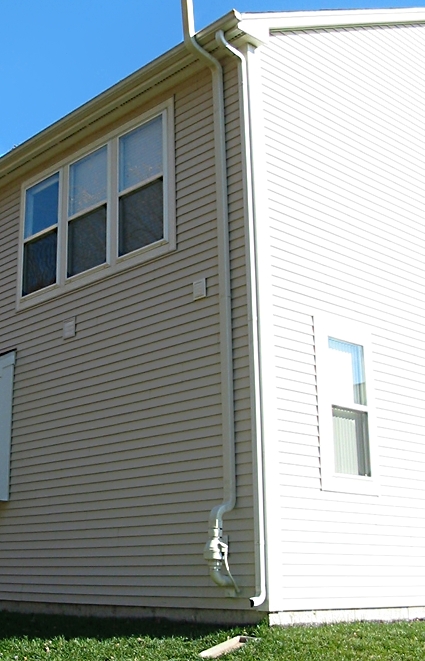
If testing confirms elevated levels, the standard approach for most Canadian homes is active soil depressurization (ASD): a suction pipe is inserted through the foundation slab into the granular material below, and a small fan draws soil gases — including radon — up and exhausts them above the roofline before they can enter the living space. Well-installed ASD systems typically reduce indoor radon concentrations by 80 to 99 percent. Sealing cracks and increasing general ventilation are supplementary measures but are not reliable as standalone solutions.
The C-NRPP directory lists certified radon measurement and mitigation contractors across Canada. Health Canada's "Guide for Radon Measurements in Residential Dwellings" provides standardized testing protocols.
Carbon Monoxide
Carbon monoxide (CO) is produced by incomplete combustion. In residential settings, sources include gas furnaces, boilers, fireplaces (wood and gas), water heaters, portable generators, and attached garages. A properly maintained furnace exhausts combustion gases to the outside through a flue. When that flue becomes blocked, cracked, or when negative pressure in the house causes backdrafting, CO can enter living spaces.
CO detectors are now legally required in new residential construction in most Canadian provinces, and mandatory in existing homes in several jurisdictions. The Ontario Fire Code, for example, requires CO alarms on every floor where a sleeping area exists if the home has a fuel-burning appliance or attached garage.
Health Canada's guidance on CO is aligned with the Canadian Ambient Air Quality Standards. The concern at residential levels is primarily chronic, low-level exposure rather than acute poisoning events, though both are possible with a malfunctioning appliance.
Attached Garages
One source of CO that is sometimes underestimated is the attached garage. A car idling briefly in an attached garage — even with the garage door open — can introduce significant quantities of CO into the living space if the air seal between the garage and the house is inadequate. The National Building Code requires a specific construction approach for the wall and floor separating an attached garage from a dwelling, including a solid door with appropriate weatherstripping.
Volatile Organic Compounds (VOCs)
Volatile organic compounds are a chemically diverse group of carbon-based compounds that evaporate readily at room temperature. In homes, sources include paints, varnishes, adhesives, sealants, new flooring materials, composite wood products (which off-gas formaldehyde from urea-formaldehyde resins), cleaning products, personal care products, and air fresheners.
Formaldehyde is among the most consistently measured VOCs in Canadian residential studies. It is classified as a known human carcinogen at high concentrations, and chronic low-level exposure has been associated with respiratory irritation. New construction materials — particularly engineered wood products such as oriented strand board, laminate flooring, and medium-density fibreboard — off-gas formaldehyde for months to years after installation. Health Canada has published a guideline for indoor formaldehyde at 123 micrograms per cubic metre (µg/m³) for long-term exposure.
Practical Context
VOC concentrations in newly built or recently renovated homes are typically several times higher than in older stock. The off-gassing rate decreases over time but is accelerated by higher indoor temperatures. Ventilation — particularly the flush-out protocols sometimes used in commercial LEED-certified buildings — can substantially reduce VOC concentrations in the weeks after completion. For occupied homes, ensuring adequate mechanical ventilation rates and choosing low-VOC products when renovating are the primary available strategies.
Particulate Matter (PM2.5)
PM2.5 refers to airborne particles with an aerodynamic diameter of 2.5 micrometres or less. Particles in this size range penetrate deeply into the respiratory tract. Indoor sources include cooking (particularly high-heat cooking with oil), candles, wood-burning fireplaces and stoves, tobacco smoke, and incense. The outdoor-to-indoor transport of PM2.5 is also significant: during periods of elevated ambient PM2.5 — including wildfire smoke events, which have become more frequent in British Columbia, Alberta, and increasingly central Canada — particles infiltrate homes through ventilation systems and envelope gaps.
HEPA filtration, either in a central system or a portable purifier, is effective at capturing PM2.5. The CADR (Clean Air Delivery Rate) rating of a portable unit indicates how quickly it reduces particulate concentrations in a given volume of air. For periods of heavy outdoor smoke, operating portable HEPA purifiers in sleeping areas and reducing outdoor air intake in the ventilation system are standard recommendations from provincial health authorities.
Biological Pollutants
Mould, bacteria, pet dander, dust mite allergens, and pollen are biological contaminants that affect indoor air quality. Mould growth requires moisture — typically a surface moisture content above the equilibrium threshold for a given relative humidity and temperature. In airtight, well-insulated homes, moisture management is more dependent on the building assembly than in older construction. Vapour barriers, properly detailed window installations, and balanced ventilation all affect whether condensation-related mould becomes a problem.
Dust mite populations correlate with humidity levels. At indoor relative humidity consistently below 50 percent, dust mite reproduction is limited. Energy-recovery ventilators (ERVs), which transfer moisture as well as heat, can help maintain appropriate humidity in winter by retaining some indoor moisture that would otherwise be exhausted. In very humid climates, the opposite management challenge applies.
Health Canada's Indoor Air Quality guidelines and the Canada Mortgage and Housing Corporation (CMHC) have published technical guides on mould prevention, moisture management, and IAQ testing for residential buildings.
Summary: Testing and Documentation
For homeowners seeking a baseline understanding of indoor air quality, radon testing with a long-term alpha track device is the most clearly actionable step. CO detectors should be installed per applicable provincial requirements. For VOCs, formaldehyde, and PM2.5, portable multi-sensor IAQ monitors have become more affordable and give reasonable real-time trend data, though they vary considerably in calibration accuracy.
More detailed characterization — including laboratory analysis of specific compounds — requires sampling by a qualified industrial hygienist or indoor air quality professional. Provincial associations and the Indoor Air Quality Association (IAQA) maintain directories of practitioners.